Improving productivity is priority one for Queensland’s building and construction industry, as rising costs lead to more projects being shelved, and demand for new homes diving.
Figures from the Australian Bureau of Statistics (ABS) show the number of new dwellings given the tick across the state declined by 4.1% in the three months to September, largely owing to an 11.5% drop in approvals for units. Detached home approvals were steady at +1.6%.
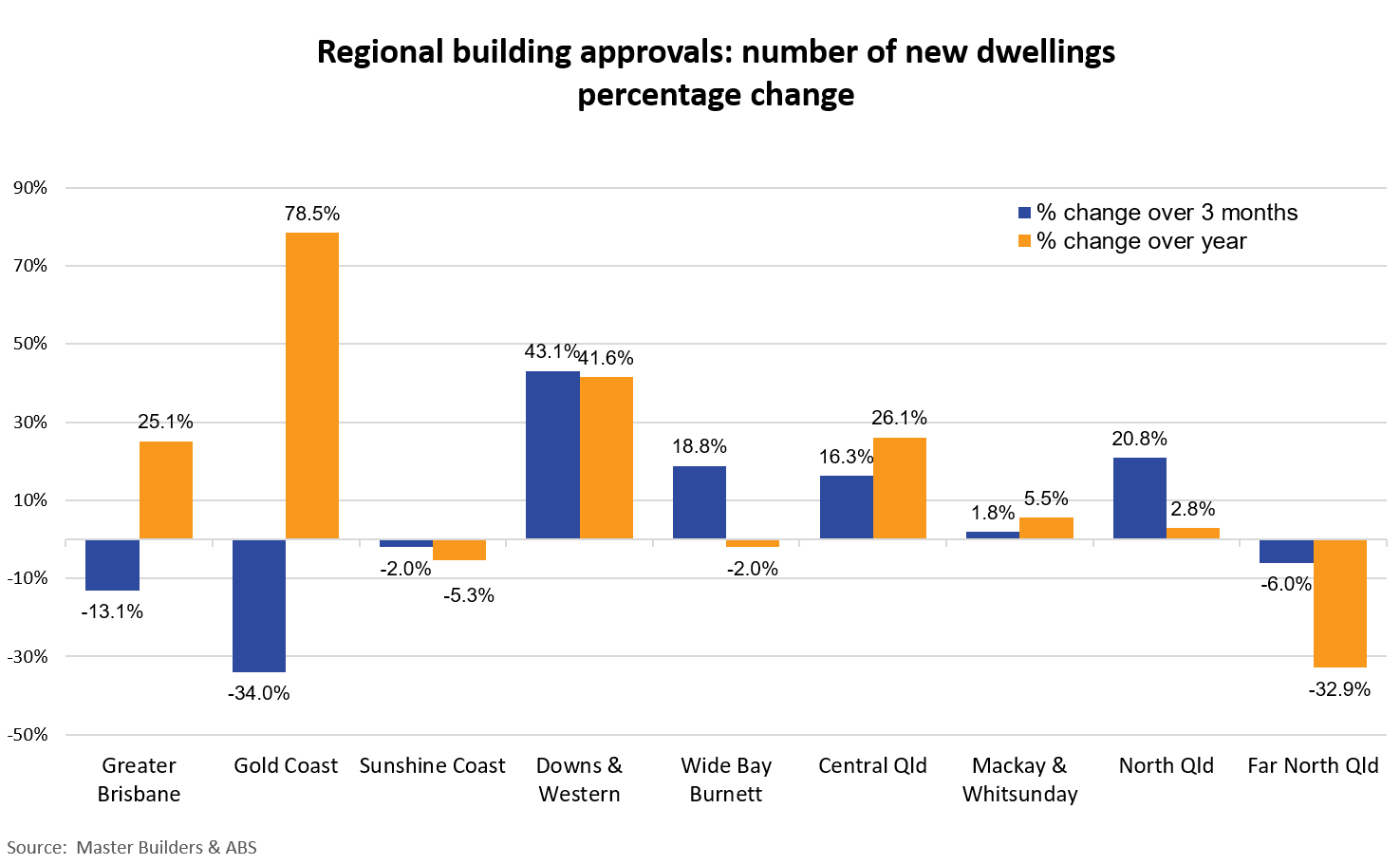
Across the regions, the fall was most strongly felt on the Gold Coast (-34.0%) and in Greater Brisbane (-13.1%), with approvals for both detached houses and units falling over the September quarter. The state’s Far North (-6.0%), and Sunshine Coast (-2.0%) also dipped.
Downs & Western (Toowoomba) continues to be the standout performer, with new dwelling approvals having jumped 43.1% over the past three months, followed closely by North Queensland (+20.8%). Wide Bay Burnett (+18.8%) and Central Queensland (+16.3%) both saw an improvement, while Mackay & Whitsunday held on at +1.8%.
A total of 48,520 homes were given the green light in the 12 months to September – still just shy of the government target of 50,000 new dwellings each year.
Master Builders Deputy CEO Michael Hopkins said the figures reflected the pressures being felt by industry.
“It is no surprise that as interest rates have moved up, building approvals have moved down,” Mr Hopkins said.
“Higher interest rates arrived after the federal government’s negative gearing and CGT changes hit confidence, leading to a cooling in demand, while interest rate hikes, high fuel costs, and a persistent construction workforce shortage make life harder for consumers and businesses alike.
“It is no wonder that ABS figures show it now costs 42.9% more to build a house in Queensland than it did five years ago. Construction costs in our state have jumped +6.1% over the past 12 months – worryingly, that’s above the national average of 4.9%.”
Mr Hopkins said boosting productivity was key to making much-needed projects stack up.
“While the Olympic program is a huge focus, it’s $7.1bn out of a four-year government infrastructure pipeline of $119bn. We need workers across all sectors of the industry, not just for the 2032 delivery program. The focus needs to be on other policy measures which will improve productivity – and help our industry move on from the mistakes of the past.
“Under the Industrial Relations and Other Legislation Amendment Bill, we support a fit and proper person test to establish a minimum standard for those entrusted with right-of-entry powers on worksites and help restore public confidence in the system. Strengthened whistleblower protections will also ensure people can speak up without fear of threats or retaliation. Had stronger protections been available earlier, some of the productivity damage caused by the former CFMEU leadership might have been avoided.”
“We also need a smart and balanced approach to implementing the new Queensland Construction Productivity Code for state government projects valued over $150 million. The Code will help boost safety, strengthen accountability, level the playing field on procurement, give taxpayers better value for money, renew the focus on workforce planning, and bring more women and apprentices into our industry, bolstering it now and in the years ahead.”