30 January 2026
Now is the time to fast‑track the productivity reforms already on the table, with Queensland’s latest approvals showing the state has pushed past 40,000 new homes for the first time since the post‑pandemic boom.
The Australian Bureau of Statistics reported a 34.2 per cent increase in the number of units and detached homes given the nod across Queensland (40,075) in the year to November – the biggest jump since 2021/22. The surge was all about unit approvals (+24.8 per cent), consistent with the upward trend in this category across the last 12 months. Approvals for detached houses remained steady, growing 4.4 per cent across the same period.
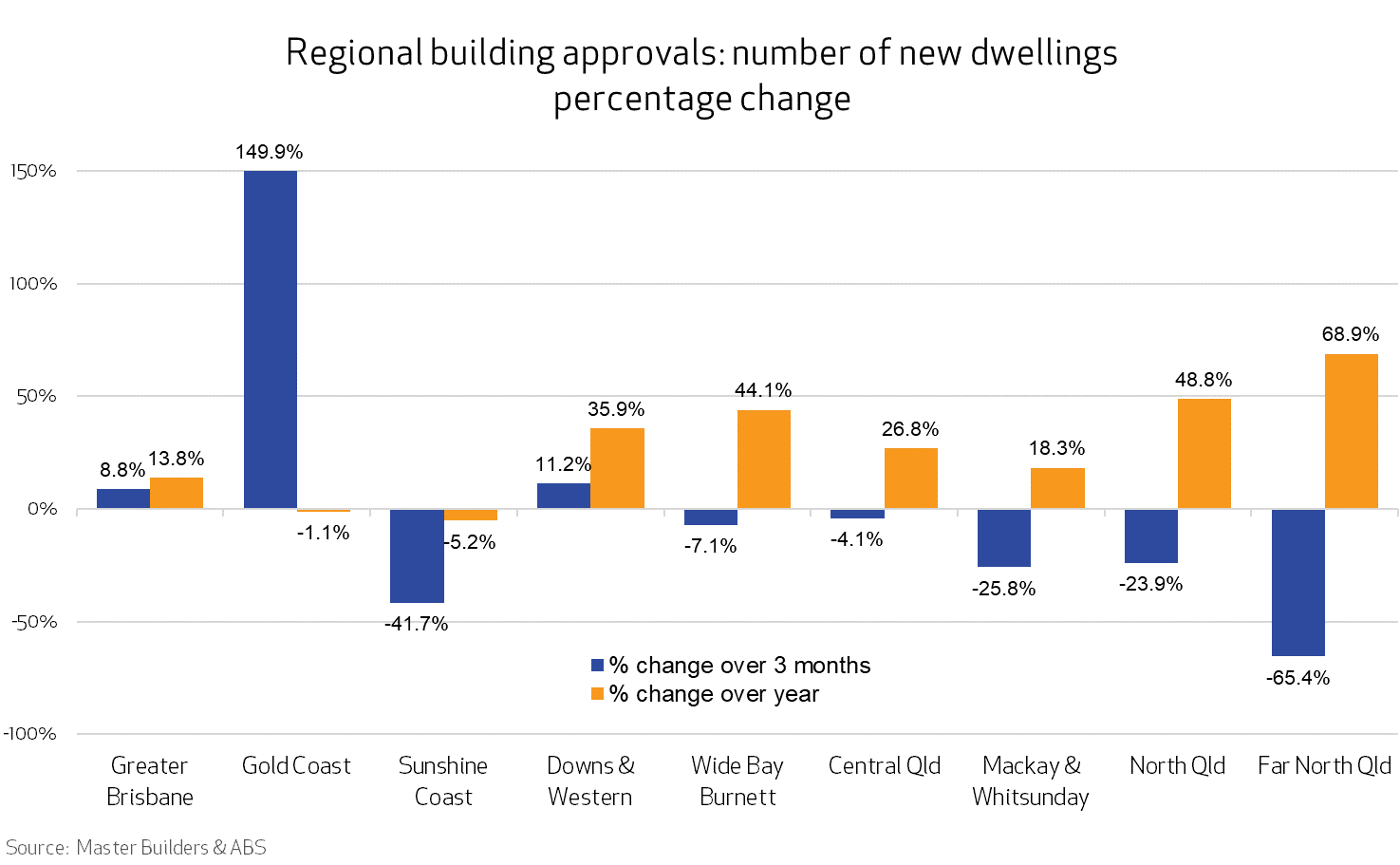
Across the three months to November, the Gold Coast was the real mover of the regional breakdown, where total approvals almost tripled to +149.9 per cent. Downs & Western was next best at +11.2 per cent, thanks to a surge in approvals for detached houses. Greater Brisbane was the only other region in the ‘black’ over the same period, with balanced growth between units and detached houses resulting in an 8.8 per cent increase. Approvals in the remaining regions were down across the board.
It comes as Master Builders Queensland launches its 2026 Policy & Advocacy Agenda, pointing to the key priorities that must be targeted to help the state hit the magic government number of 50,000 new homes to be built every year.
“Industry has nailed down the solutions, but we urge the state government to take immediate action to tackle the extraordinary pipeline of housing, community projects and infrastructure ahead,” CEO Paul Bidwell said.
“The Queensland Productivity Commission (QPC) has done the work with its final report, and in it they amplified our calls on several levers the state government needs to pull now.
“Small businesses are the backbone of our industry, so must be sustainable, profitable, and innovative. The QPC recommended the Project Trust Accounts framework be reviewed with the view that it be scrapped in favour of security of payment measures that work, stripping away some of the cost and complexity slowing new home delivery, and helping subbies get paid if a business collapses. So far, government has only ‘noted’ this recommendation.
“We’re also continuing our calls for the government to make changes to the NCC standards on energy efficiency and accessibility in their ongoing and highly anticipated review. We know this would help save around $44,000 on a new home build and put the choice rightly back in the hands of consumers.”
As the state continues to battle a critical workforce shortage, Mr Bidwell said the focus must switch to getting boots on the ground, faster.
“We again urge government to expand and extend the existing Small Business Apprenticeship Pilot Program for small and family businesses in the upcoming state budget. We also need to attract more apprentices by boosting wage subsidies, opening more training opportunities for people to join our industry, and helping them to stick with us.
“If we’re going to ‘beg, borrow and steal’ workers to deliver the pipeline, as Deputy Premier Bleijie puts it, it’s crucial that we make it easier for interstate and skilled migrant workers to have their qualifications recognised in Queensland.”
Another obstacle to boosting housing supply is insufficient planning and funding of utilities networks for new developments.
“We applaud the state government for supporting the QPC’s recommendation on establishing clear frameworks so that power, water and sewerage connection milestones line up with development approvals and construction programs. We now need to make that happen,” Mr Bidwell said.
“The demand for new housing in Queensland has arguably never been greater, making it critical we drive change, now, where it matters most.”
Read Master Builders’ 2026 Policy & Advocacy Agenda.
Major Sponsors